Loose Skin After Weight Loss? How RF Skin Tightening Can Help After Weight-Loss Injections
First: congratulations. If you’re reading this because you’ve lost a significant amount of weight — whether on weight-loss injections like semaglutide or tirzepatide, or any other way — that took real work, and it deserves to be said.
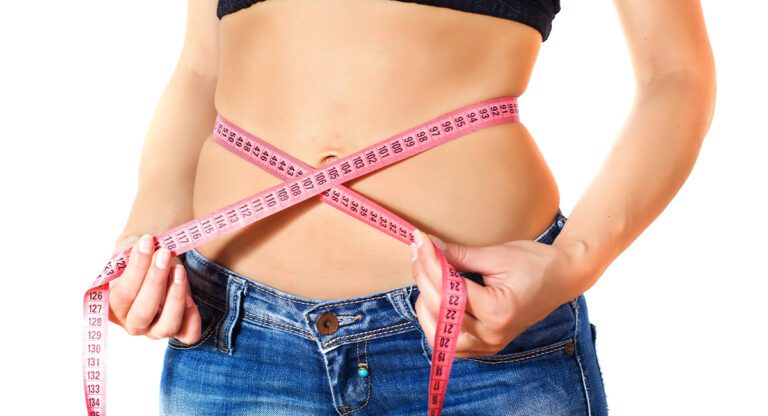
Second: you’re not imagining the loose skin, and you’re not alone in being frustrated by it. At Evolution of Her Beauty Med Spa, this has become one of the most common conversations we have, especially with Arlington and Richardson patients coming off successful GLP-1 programs. Here’s the honest guide: why it happens, what can actually help, and what can’t.
Why skin doesn’t always bounce back
Skin is elastic, but it has limits. Think of it like the waistband of an old pair of leggings: stretched gently for a short time, it recovers; stretched a lot, for a long time, it doesn’t fully spring back. A few factors decide how much looseness you’re left with:
- How much weight you lost, and how fast. Rapid loss gives skin less time to adapt gradually. Weight-loss injections often produce steady, significant loss — wonderful for your health, harder on skin elasticity.
- How long the skin was stretched. Years at a higher weight remodel the collagen and elastin in the skin itself.
- Age and genetics. Collagen production slows naturally as we get older, and some people’s skin is simply more elastic than others’.
- Sun and habits. Years of sun exposure weaken collagen; smoking does too. Protein intake and hydration support the skin you’re keeping.
None of this is a character flaw, and none of it means you did the weight loss “wrong.” It’s just physics and biology — and it has real options.
What RF skin tightening actually does
RF stands for radiofrequency. In a treatment session, a handheld device gently warms the deeper layers of your skin. That warmth supports your body’s own collagen — the protein that keeps skin firm and bouncy — encouraging it to rebuild and tighten over time. Most people say the session feels like a warm massage. There’s no surgery, no needles, and no downtime; treated skin might look slightly pink for a short while, and you go right back to your day.
Common areas after weight loss: the stomach, upper arms, thighs, and the neck and jawline.
Here’s the honest expectation: firmer skin from RF comes from a series of sessions spaced out over weeks, and improvement is gradual — collagen builds over weeks, not overnight. Results vary from person to person. RF tightening is a real tool for mild to moderate looseness; it is not a surgical lift in a wand, and any clinic that pitches it that way is overselling.
The honest ladder of options
Part of our job is telling you where you actually stand on this ladder:
Step 1 — RF skin tightening, often paired with cavitation. For mild to moderate looseness, especially while you’re still losing or newly maintaining. Cavitation can help with small remaining fat pockets while the RF works on firmness — a combination many of our post-weight-loss clients choose.
Step 2 — Morpheus8. If looseness is more significant, Morpheus8 takes microneedling plus radiofrequency deeper, remodeling collagen where firmness is built. It’s a stronger intervention with a few days of redness, and often the right middle step before anyone talks about surgery.
Step 3 — Surgery, honestly. If there’s a large amount of excess skin — a hanging fold after major loss — no energy-based treatment will remove it, and the truthful answer is a surgical consultation. We’ll tell you that directly rather than sell you sessions that can’t deliver what you’re picturing. That’s a promise.
When should you start tightening — during weight loss or after?
You don’t have to wait until you hit your goal weight. Many people start RF tightening while they’re still losing, once the loss is well underway, so collagen support keeps pace as the weight comes down. Others prefer to stabilize first and then treat. Both are reasonable; the right timing depends on how much more you plan to lose. If you’re one of our injection patients, this is a conversation we naturally build into your program — and if you lost weight elsewhere, you’re just as welcome to come talk it through.
A few habits genuinely help alongside treatment: keep your protein up (your body needs building material for collagen and muscle), stay hydrated, add resistance training — muscle underneath gives skin a firmer foundation — and protect your skin from the sun.
Frequently Asked Questions
How many RF skin tightening sessions will I need?
Firmer skin comes from a series — most clients do several sessions spaced out over weeks. At your consultation, we’ll map out a plan based on the area and how your skin responds.
Does RF skin tightening hurt?
Most people say it feels like a warm massage. The warmth is monitored and adjusted so it stays comfortable, and there’s no downtime afterward.
Can RF tightening fix a lot of excess skin?
Honestly, no. It’s best for mild to moderate looseness. For a large amount of excess skin, surgery is the real answer — and we’ll tell you that at your consultation instead of selling you sessions that can’t do it.
Should I wait until I’m done losing weight to start?
Not necessarily. Many clients begin tightening while still losing, once the loss is underway. We’ll talk through timing based on your goals at your consultation.
Talk through your options
Call or Text (469) 708-3954 to book a consultation at Evolution of Her Beauty Med Spa — Arlington on West Pioneer Parkway (Wednesday, Friday, Saturday) or Richardson on East Arapaho Road (Tuesday, Thursday, Saturday) — or visit our RF Skin Tightening & Cavitation service page on our website to learn more and book from there. You did the hard part losing the weight. Let’s talk honestly about the finishing part.